






Article Overview
A well-planned layout is what turns a plain patch of land into a garden people actually want to spend time in. Whether you're working with a sprawling backyard or a narrow balcony, the right layout balances open space, planting beds, and pathways so every corner has a purpose.
Key Takeaways

Zone by Activity
Divide the garden into clear zones — dining, lounging, planting — so each area feels intentional.
Work With the Sun
Map sunlight through the day before placing seating areas or shade-loving plants.
Use Vertical Space
Trellises, hanging planters, and tiered beds free up ground space in compact gardens.
Keep Sightlines Open
Leave a clear view from key windows or entry points to make the garden feel larger.
Start With a Simple Sketch
Before buying a single plant, sketch the space to scale and mark existing features like trees, walls, and drainage points. This single step prevents most of the layout mistakes we see — overcrowded beds, blocked pathways, and awkward furniture placement.
Design for Small Spaces
In compact gardens and balconies, layered planting and multi-purpose furniture do the heavy lifting. Raised planters along a boundary wall, a fold-away table, and trailing greenery on a trellis can make a tiny space feel lush without feeling cramped.
Design for Larger Gardens
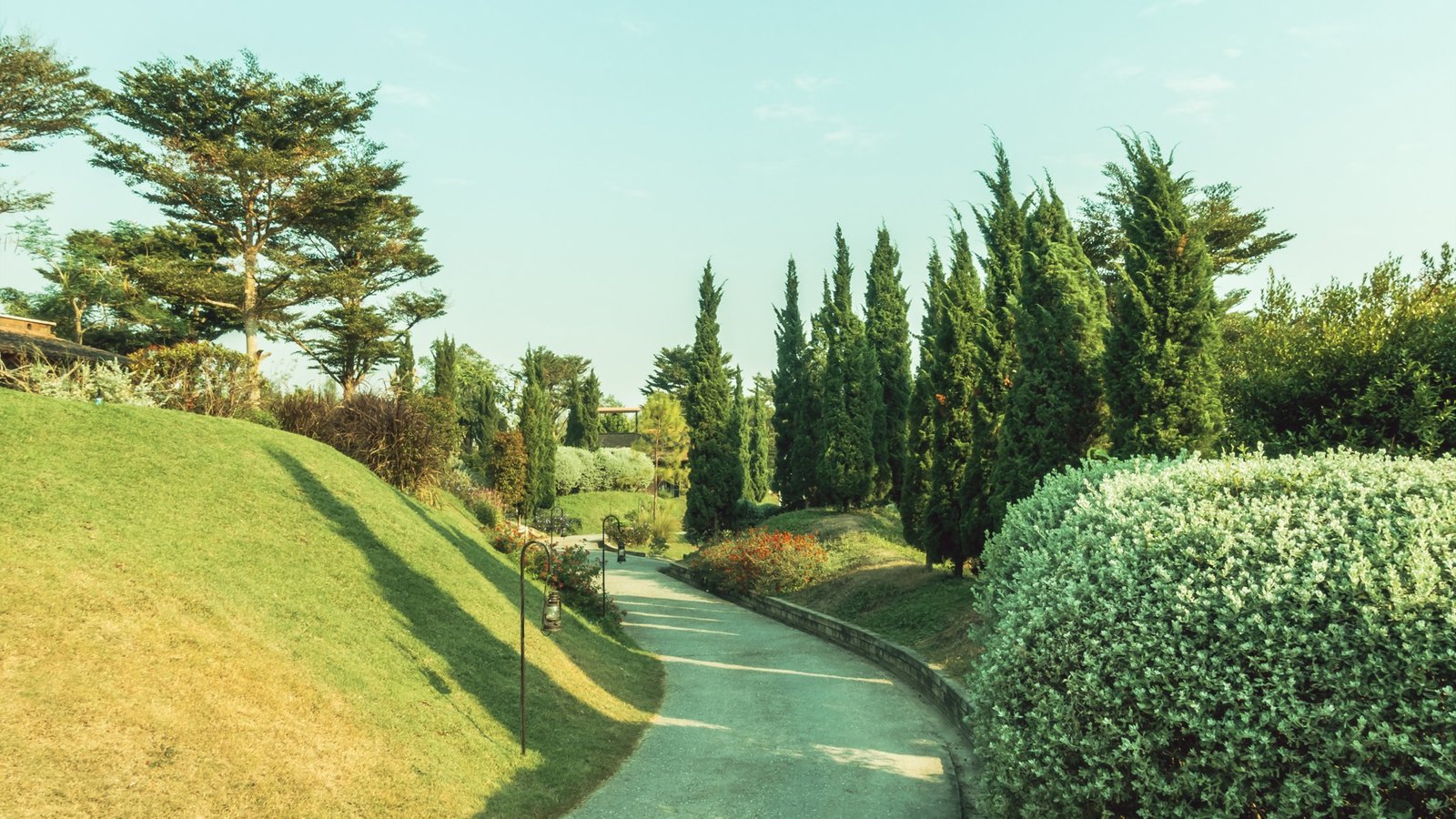
Bigger gardens benefit from a strong central axis — a path or lawn strip that draws the eye through the space — with planting beds, seating nooks, and utility areas arranged along it. This keeps a large garden from feeling scattered or empty.